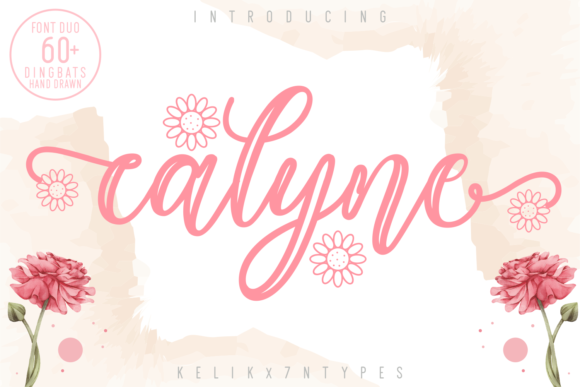
Calyne: A Delicate and Elegant Handwritten Font with Floral Elements
Calyne is a handwritten font that blends elegance with artistic flair, making it a unique choice for designers and typographers. Its design incorporates floral elements and well-rounded letters that give it a soft, organic feel. This font is PUA encoded, which means users can easily access its glyphs and swashes through standard font tools. Whether you're working on branding, illustrations, or creative projects, Calyne offers a versatile option that stands out in both digital and print formats.
As a font, Calyne is designed to evoke a sense of artistry and refinement. The rounded letterforms and delicate flourishes make it ideal for projects that require a personal or handcrafted touch. However, like any font, it has specific strengths and limitations that should be considered before incorporating it into a design project.
Why Consider Using Calyne?
There are several reasons why someone might be interested in using Calyne. First, its elegant and delicate style makes it suitable for a wide range of creative applications. It works particularly well for invitations, greeting cards, logos, and other designs where a soft, ornate appearance is desired. The inclusion of floral elements adds visual interest, making it a great fit for projects related to nature, flowers, or romantic themes.
The PUA encoding feature also enhances usability, allowing designers to access extended characters and swashes without needing additional tools or plugins. This accessibility can streamline the design process and reduce the need for workarounds when using special characters or decorative elements.
Additionally, Calyne's versatility allows it to be used across various mediums, from web-based content to printed materials. Its clean yet expressive design ensures that it remains legible while still maintaining an artistic appeal.
Benefits and Tradeoffs of Using Calyne
One of the main benefits of Calyne is its aesthetic appeal. The font’s delicate and elegant style can elevate the visual quality of a design, making it stand out from more generic or modern typefaces. Its floral accents add a unique character that can enhance the overall look of a project, especially in niches such as wedding invitations, botanical illustrations, or luxury branding.
However, there are tradeoffs to consider. Because Calyne is a handwritten font, it may not be the best choice for projects that require high readability or large blocks of text. The ornate details and variations in letterforms can make long passages harder to read, especially at smaller sizes. Designers should be mindful of this limitation and ensure that Calyne is used appropriately in context.
Another consideration is compatibility. While Calyne is PUA encoded, not all software or platforms support PUA encoding natively. Users may need to use specific tools or settings to access all the glyphs and swashes. This could be a minor inconvenience for those unfamiliar with the technical aspects of font encoding.
Situations Where Calyne Is a Strong Fit
Calyne shines in situations where a designer wants to add a touch of elegance and personality to their work. It is particularly effective in the following scenarios:
- Wedding Invitations and Stationery: The floral elements and soft curves of Calyne make it a perfect match for romantic and celebratory designs.
- Branding and Logos: For businesses that want to convey sophistication or creativity, Calyne can help create a distinctive visual identity.
- Illustrations and Artwork: Its ornate style complements artistic compositions, adding depth and visual interest to illustrations.
- Special Occasions: Whether it's a birthday card, thank-you note, or holiday greeting, Calyne brings a personal and heartfelt touch to these items.
In these contexts, Calyne can serve as a focal point, drawing attention and enhancing the emotional impact of the design.
When Alternatives May Be More Suitable
While Calyne has many strengths, there are situations where alternative fonts may be more appropriate. For example, if a project requires a highly readable font for body text, a sans-serif or serif font would be a better choice. These fonts are designed for clarity and consistency, making them more suitable for long-form content or professional documents.
Additionally, for projects that involve multilingual text or require strict typographic consistency, a more standardized font may be preferable. Calyne’s handwritten nature introduces variability that could be challenging to manage in complex layouts or international projects.
Designers should also consider the target audience. If the intended users are looking for something minimalistic or modern, Calyne’s ornate style may not align with their expectations. In such cases, opting for a cleaner, more contemporary font could be more effective.
Practical Insights for Choosing Calyne
When deciding whether to use Calyne, it's important to evaluate the goals of the project and the needs of the audience. Ask yourself: Does the design require a personal, artistic touch? Will the font enhance the message or theme of the project? Are there any readability concerns that need to be addressed?
If the answer to these questions suggests that Calyne fits well, then it can be a valuable addition to your design toolkit. However, if the project demands a more straightforward or functional approach, it may be worth exploring other options.
Ultimately, the decision to use Calyne depends on how well it aligns with the overall vision of the design. By carefully considering its strengths and limitations, designers can make informed choices that lead to successful and impactful results.